
Nail biting, scientifically known as onychophagia, is a widespread habit that usually starts during childhood. It’s driven by various factors such as stress, boredom, a desire for perfection, or even copying others around you who bite their nails. Interestingly, when stress or anxiety levels rise, people often turn to nail biting as a coping method. Looking closely at family members or friends might reveal patterns that could be the source of your nail biting habits. Ready to dig deeper into its causes, solutions, and how it relates to nail problems?
The causes of nail biting can vary from person to person but commonly include stress, boredom, anxiety, or a habit developed during childhood. It’s important to address the underlying triggers to tackle the habit effectively.
Common Reasons for Nail Biting

Nail biting is a habit that seems to find its way into many people’s lives. Perhaps it starts during childhood, with a curious nip at a fingernail or when you’re a teenager feeling stressed before an exam. It could even happen when you’re an adult trying to stave off boredom during a long meeting. People bite their nails for several reasons, and the first step in trying to stop is understanding those reasons.
The Stress Connection
Nail biting often emerges as a response to stress and anxiety, providing a temporary distraction from the tension individuals may be experiencing. Whether it’s the pressure of an impending exam during adolescence or the challenges of adulthood, the habit becomes a tangible outlet for managing heightened emotions.
According to studies, about 60% of people bite their nails due to stress.
Boredom as a Mindless Trigger
Beyond stress, boredom can also contribute to developing nail biting habits. In moments of idleness, individuals may fidget with their fingers, and nail biting can become a seemingly automatic response. The proximity of our hands makes nail biting an easily accessible and mindless activity when there’s nothing else to engage with.
Perfectionism Influence
Believe it or not, perfectionism can also be a trigger. Some individuals who are very particular about having everything “just right” may turn to nail biting to manage their emotions when things don’t go according to plan.
John once told me a story about how he started biting his nails while trying to build model airplanes as a kid. Every time he made a little mistake, he felt so frustrated that he nibbled on his nails as if it would help him feel better. Since then, whenever he feels things aren’t going perfectly, he catches himself biting his nails again.
Social Influences
Family members and peers can also play a role in this habit. Children often imitate the behaviors of those closest to them, and seeing parents or siblings engage in nail biting can normalize their behavior.
Understanding these common reasons for nail biting can help individuals identify the triggers behind their habits and take steps toward breaking free from this common but challenging behavior.
Unraveling the intricate relationship between stress, anxiety, and nail biting allows us to appreciate the complexities at play in addressing this pervasive issue. Let’s now delve into the specific role of stress and anxiety in shaping this habitual behavior.
Role of Stress and Anxiety in Nail Biting
Stress and anxiety can influence our behavior in numerous ways, and nail biting is often a visible manifestation of these internal struggles. When stress levels rise or anxiety takes hold, individuals may experience an overwhelming urge to engage in repetitive behaviors – such as nail biting – as a means to manage or alleviate their feelings.
For some people, nail biting becomes a subconscious form of seeking relief from tension. Biting nails offer a momentary distraction from anxious thoughts, providing a physical outlet for emotional distress. It’s almost akin to creating a temporary diversion, giving the mind a break from the intense feelings that may consume an individual.
Moreover, stress and anxiety often lead to heightened levels of tension, both mentally and physically. This can result in restless behaviors that seek an outlet, and nail biting becomes an unconscious way to channel this internal tension into physical action. It is as though individuals are attempting to transfer their discomfort onto something tangible – their nails.
Furthermore, engaging in repetitive behaviors like nail biting can create a sense of control amidst the chaos of heightened stress and anxiety. It provides a predictable pattern of movement that individuals can focus on, which can temporarily reduce the intensity of their emotional distress.
Equally important is recognizing that nail biting doesn’t just serve as a coping mechanism for adults; it also holds significant value for children who encounter stressful situations. As such, addressing these underlying emotional triggers is crucial when working to alleviate nail biting habits.
Understanding how stress and anxiety contribute to nail biting behaviors allows us to comprehend the complexity of this habit. It opens the door to exploring effective strategies for preventing and managing this common issue.
Nail Biting as a Form of Comfort

Have you ever experienced the immediate relief that follows nail biting during a challenging or stressful situation? This habitual behavior triggers the release of endorphins, the body’s natural pleasure-inducing chemicals, offering a temporary escape from stress and pain. Nail biting becomes a coping mechanism, providing a fleeting sense of comfort and reassurance during moments of anxiety.
- Endorphin Release and Pleasure: Nail biting induces the release of endorphins, bringing about feelings of pleasure and minimizing stress and discomfort.
- Coping Mechanism: The habit serves as a coping mechanism, offering a brief escape during tough or stressful moments.
The Psychological Cycle of Nail Biting
Clinical psychologist Dr. Jane Smith sheds light on the psychological aspect, explaining how nail biting triggers the brain’s reward system through endorphin release. This association between nail biting and immediate relief establishes a deeply ingrained cycle. Breaking free from this cycle involves understanding the connection between comfort-seeking and the persistent nail biting habit.
Holistic Management Strategies
Addressing nail biting requires a holistic approach that goes beyond mere willpower. Dr. Smith suggests introducing alternative comfort and stress relief pathways to replace destructive habits. Healthy stress-relief practices such as mindfulness meditation, deep breathing exercises, or keeping stress balls and fidget toys nearby can gradually reduce dependency on nail biting for comfort.
- Alternative Stress-Relief Practices: Incorporate mindfulness meditation, deep breathing, or fidget toys to redirect the need for comfort.
- Holistic Approach: Breaking the cycle involves recognizing the need for comprehensive strategies beyond sheer willpower.
Developing Healthier Coping Strategies
By acknowledging nail biting as a form of comfort-seeking, individuals can open up new avenues for developing healthier coping mechanisms. Understanding the psychological factors behind the habit and actively working towards introducing alternative mechanisms for stress relief can empower individuals to break free from the cycle of nail biting as their primary source of comfort.
- Psychological Awareness: Recognize the comfort-seeking aspect of nail biting to understand its roots.
- Breaking the Cycle: Actively work on introducing alternative, healthier coping strategies to replace nail biting.
How Unresolved Emotions Contribute to Nail Biting
Nail Biting and Emotional Regulation
Nail biting isn’t just a mindless habit; it can be closely tied to our emotions. For some, it could respond to stress, anxiety, boredom, or even excitement. When people experience high levels of stress or anxiety, they’re more likely to engage in nail biting behavior. It’s like a coping mechanism; biting your nails releases tension or helps distract from overwhelming emotions.
Research has indicated a correlation between nail biting and emotional regulation difficulties. This suggests that the habit may serve as a way for some individuals to manage their emotional distress. Sometimes, people resort to nail biting as an unconscious expression when they struggle to verbalize their emotions.
Psychoanalytic Perspective
Psychological theories delve into the realm of unconscious emotions and unresolved conflicts. According to such perspectives, nail biting may be linked to deeper psychological issues that are not immediately conscious. It could manifest unresolved emotions or conflict buried beneath the surface, beyond our immediate awareness.
Understanding these deep-rooted emotional connections can explain why nail biting persists despite conscious efforts to stop. It highlights the importance of addressing the underlying emotional factors rather than focusing solely on surface-level behavior.
Exploring Healthy Outlets
Addressing nail biting involves identifying triggers and seeking healthier ways to cope with unresolved emotions. Finding alternative activities that provide similar sensory experiences or outlets for nervous energy can help redirect the urge to bite nails.
Engaging in stress-relief practices, such as mindfulness meditation, exercise, or hobbies that occupy the hands and mind, can effectively manage the emotional triggers behind nail biting. These activities offer healthy channels for managing stress and anxiety without causing harm to oneself.
Lastly, there is immense value in seeking support from mental health professionals who can guide the development of healthy coping mechanisms and address the root causes of emotional distress that fuel nail biting behaviors.
By understanding how unresolved emotions contribute to nail biting and actively pursuing healthier outlets for emotional expression and regulation, individuals can gradually break free from this habit and cultivate a greater sense of emotional well-being.
Bringing attention to the complex interplay between psychological conditions and nail biting behaviors opens new avenues for understanding and intervention. Let’s explore the intricate connections between psychological conditions and nail biting habits.
Psychological Conditions and Their Relationship with Nail Biting
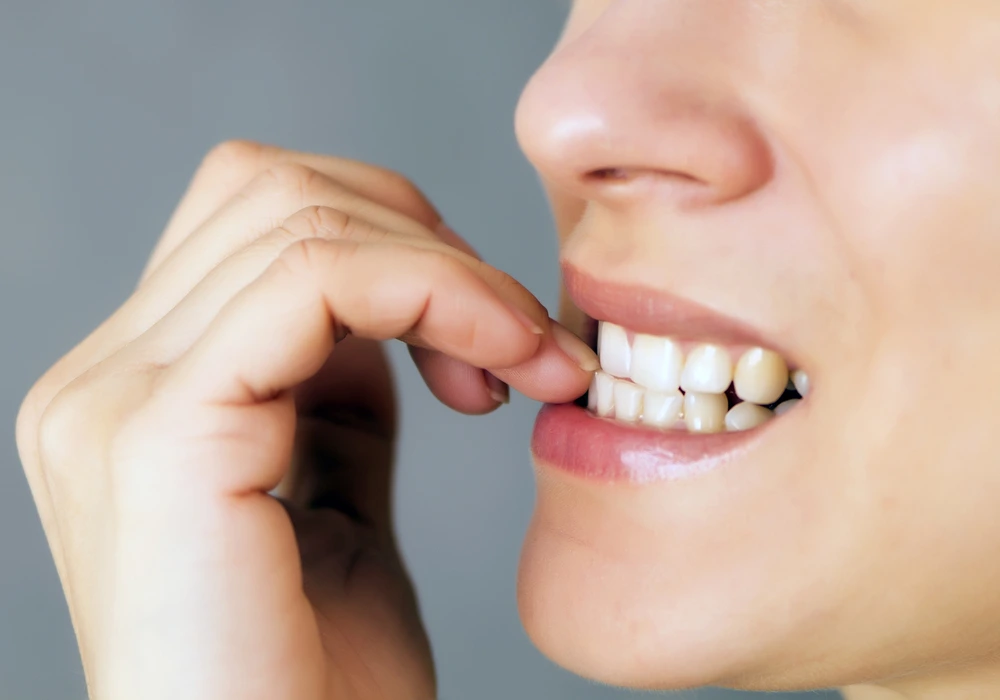
Nail-biting isn’t just a bad habit; it’s often intertwined with deeper psychological conditions. Obsessive-compulsive disorder (OCD), known for repetitive, intrusive thoughts and compulsive behaviors, can lead individuals to compulsively engage in nail biting to alleviate anxiety triggered by their intrusive thoughts. Similarly, attention-deficit/hyperactivity disorder (ADHD) and autism spectrum disorders are also closely linked to nail-biting behavior.
Those with ADHD may use nail biting as a sensory-seeking behavior or as a way to manage their restlessness and difficulty focusing. In autistic individuals, nail biting might serve as a self-soothing mechanism, providing comfort during periods of heightened stress.
Understanding OCD
OCD has been linked to nail biting at a rate of 20-45%, demonstrating that individuals with OCD are significantly more likely to engage in this behavior compared to the general population. With OCD, nail biting may serve as a compulsive response to intrusive thoughts or fears, providing temporary relief from distress. It’s important to note that the manifestation of OCD can vary widely from person to person, making it essential for those struggling with this condition to seek professional guidance and support.
The Impact of ADHD
Individuals with ADHD display impulsive behaviors and difficulty maintaining attention and focus. For some individuals with ADHD, nail biting can manifest as a form of sensory-seeking behavior or as an attempt to relieve feelings of restlessness and distractibility. Those with ADHD must find healthy coping mechanisms and strategies that don’t result in detrimental habits like nail biting.
Nurturing Comfort for Autism Spectrum Disorders
For individuals on the autism spectrum, the repetitive nature of nail-biting can serve as a self-soothing activity, offering comfort and security during moments of heightened stress or anxiety. It’s important for caregivers and support networks of those with autism spectrum disorders to provide alternative calming techniques and help guide them toward healthier self-soothing practices.
Understanding the complex interplay between these psychological conditions and nail biting underscores the importance of addressing the root causes behind this behavior rather than solely focusing on its surface-level manifestations. By recognizing these underlying psychological factors, we can develop targeted approaches aimed at helping individuals manage their emotions and behaviors more effectively.
Now, let’s take a closer look at the influence of genetic factors on nail-biting behavior, shedding light on the inherited aspects that contribute to this common habit.
Genetic Factors Influencing Nail-Biting
Nail-biting is an action that can be inherited through generations, much like the color of your eyes or the texture of your hair. Research has shown a link between nail biting and family history. If a parent or sibling bites their nails, there is a higher chance that a child might also develop this habit. But how do genes play a part in this seemingly simple behavior?
If you’re familiar with heritability, you’ll know that it refers to the proportion of observable variation in a particular trait that can be attributed to inherited genetic factors. Studies have indicated that there is indeed a genetic component to nail biting behavior. Twin studies have been particularly illuminating in this regard.
For instance, let’s consider identical twins who share 100% of their genes. If one twin develops nail biting behavior, it’s more likely that the other twin might display similar behavior patterns due to their shared genetic makeup. This aligns with findings suggesting a relatively high genetic predisposition score for nail biting behavior based on twin studies.
This isn’t to say that genetics alone determine whether someone will bite their nails; it’s just one piece of the puzzle. Not everyone with a family history of nail biting develops the habit, and conversely, some individuals without such familial ties may engage in nail biting behavior. It’s important to remember that genetics are just one factor contributing to the complexity of human behavior and habits.
Understanding how our genetic makeup can influence our susceptibility to nail biting provides valuable insight into addressing and managing this common behavior. Let’s continue exploring other aspects contributing to nail biting tendencies and effective strategies for overcoming them.
Moving ahead, we’ll delve into the consequential health impacts of persistent nail biting and its potential ramifications on overall well-being.
Health Impacts of Nail Biting

Nail biting, often perceived as a harmless habit, can significantly impact one’s health, posing various risks and consequences beyond surface-level concerns.
- Infection Risk: One of the primary health concerns of nail biting is the increased risk of infections. When individuals bite their nails, they introduce germs and dirt directly from their hands into their mouths, particularly around the nails. Approximately 45% of nail biters develop infections due to this direct transfer of bacteria.
- Germs and Bacterial Transfer: Nail biting increases the risk of infections and the likelihood of spreading germs. Individuals who bite their nails are three times more likely to transfer bacteria from their fingers to their mouths. Considering the significant concentration of approximately 100,000 bacteria found under each square millimeter of nail, the potential for infection becomes substantial.
- Oral Health Implications: The implications of nail biting extend to oral health, with bacteria from hands entering the mouth leading to dental issues like gum disease and tooth decay. The constant pressure exerted during nail biting can also contribute to dental problems, potentially causing misalignment.
- Dental Consequences: The continuous nail biting habit can exert pressure on teeth, potentially leading to misalignment and associated dental issues.
- Skin and Tissue Damage: Chronic nail biting can damage the skin and tissue around the nails. This ongoing trauma can lead to painful and unsightly nail beds, causing discomfort and potential long-term damage.
Understanding the health impacts of nail biting underscores the importance of addressing and overcoming this seemingly innocuous habit. Recognizing the risks associated with infections, oral health problems, and skin damage is crucial in promoting overall well-being.
Effective Strategies to Stop Nail Biting
If you’re struggling with nail biting, know you’re not alone. Explore more tips and solutions for managing nail problems at Glownailbar. Remember, with dedication and support, overcoming this habit is achievable.
Related Article

