
When managing nail regrowth, it is crucial to safeguard the delicate nail with suitable coverings that shield it from dirt and bacteria while still allowing airflow. Regularly changing these coverings can prevent moisture buildup and guarantee cleanliness. Applying antibacterial ointments on the nail bed promotes healing and reduces the risk of infections. But what about the importance of nutrition in this process? Including specific foods in your diet can greatly influence nail health and strength. Are you curious about which nutrients are crucial for supporting healthy nail growth? Let’s delve deeper.
Key Takeaways
- Keep the nail bed clean and dry to prevent infections.
- Trim nails straight across to avoid ingrown nails and promote healthy regrowth.
- Regularly apply antibacterial ointments to the nail bed to prevent infections and aid healing.
- Use protective coverings to shield the nail bed from dirt and bacteria while allowing airflow.
- For healthy nail growth, consume a nutrient-rich diet with iron, omega-3 fatty acids, zinc, protein, and biotin.
Understanding Nail Regrowth
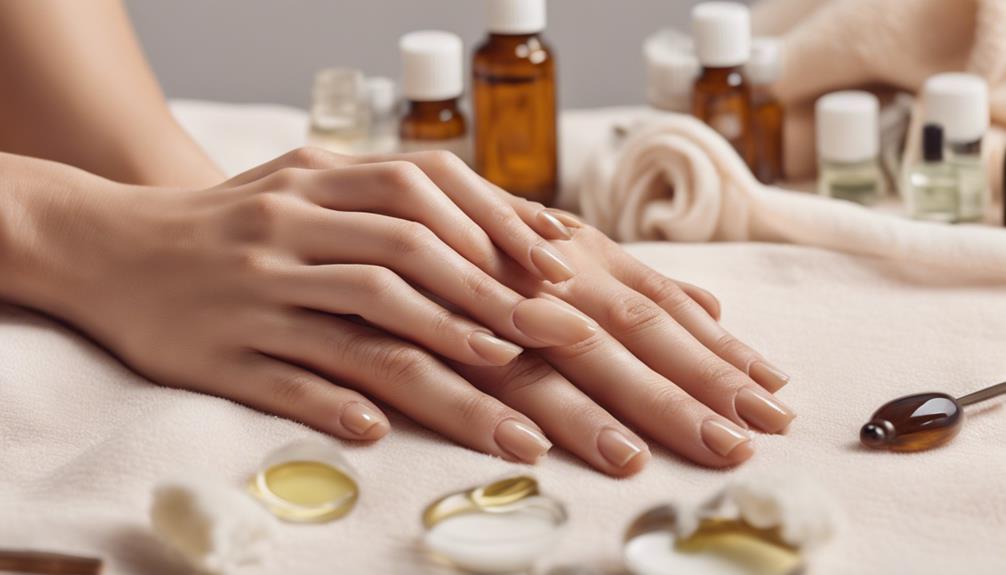
Nail regrowth is an intriguing process involving the matrix, a hidden part of the nail beneath the skin. In this matrix, new cells form and push through, eventually hardening into the nails you see.
The timeline for nail regrowth is typically 4 to 6 months, while toenails can take up to 18 months. Factors like trauma, fungal infections, medical removal, or conditions like psoriasis can extend this timeline, sometimes taking nails six months to 2 years to regrow fully after trauma.
Understanding the regrowth timeline is important if you’re caring for damaged nails. Fingernails often grow faster than toenails due to better blood flow, which provides more nutrients needed for growth.
Practicing good nail care is vital to ensure healthy regrowth and prevent infections during this period. Whether you’re dealing with nail trauma or have had a nail medically removed, maintaining cleanliness, moisture balance, and avoiding further injury will support the regrowth process.
Essential Nail Care Tips
Caring for your nails during regrowth is essential to avoid complications and maintain healthy nails. Start by keeping your nails clean and dry. This helps prevent infections and promotes healthy nail regrowth. Make it a habit to wash your hands regularly and dry them thoroughly, especially after contact with water.
Next, trim your nails straight across. This prevents ingrown nails and encourages proper growth. Use a clean nail clipper and avoid cutting too close to the skin to minimize the risk of injury.
Moisturize your nails and the surrounding skin to prevent dryness and brittleness. Use a high-quality hand cream or nail oil daily. This will keep your nails flexible and less prone to breaking or splitting.
Protect your regrowing nails by wearing comfortable shoes that don’t squeeze your toes. Avoid activities that could cause trauma to your nail bed, such as intense sports or manual labor without protective gloves.
Lastly, be patient and consistent with your nail care routine. Nail regrowth takes time, and your efforts will ensure optimal nail health. Stick to these essential tips, and your nails grow strong and healthy.
Managing Nail Trauma
When you experience nail trauma, elevate the injured nail and apply a cold compress to reduce swelling and discomfort.
Keep the nail dry, cover, and apply antibiotic ointment regularly to prevent infection.
Consider taking biotin supplements to support your nail cell regeneration for healthy regrowth.
Immediate Post-Trauma Steps
Right after you’ve experienced nail trauma, it’s important to act swiftly to mitigate damage and speed up the healing process. First, apply a cold compress to the affected nail. This helps reduce swelling and inflammation, which is critical in the initial hours following the injury. Keep the nail elevated to decrease swelling further and promote healing.
Next, consider taking biotin supplements. Biotin supports cell growth, which is essential for the regrowth process of your damaged nail. Keeping the area dry and covered will also create a healthy environment for regrowth while reducing the risk of further damage.
Here’s a quick emotional guide to help you through these tough moments:
| Steps | Emotional Benefit |
|---|---|
| Apply cold compress | Feel immediate relief |
| Elevate the nail | Reduce swelling quickly |
| Take biotin | Boost cell growth |
Preventing Infection Risks
Preventing infection risks during the regrowth process of a damaged nail is important for ensuring proper healing. Start by keeping the nail dry and covered with a bandage. This simple step helps you avoid exposure to bacteria and prevents infection risks. Applying an antibiotic ointment to the damaged area can further minimize bacterial growth, providing extra protection during the regrowth process.
Good nail hygiene is essential. Keep the nail bed clean and dry, which helps prevent infection. Clean the area gently with mild soap and water, then pat it dry before reapplying the bandage and ointment.
Elevating the nail can also reduce swelling and inflammation, which aids in the healing process and helps prevent infections.
Additionally, consider taking biotin supplements. Biotin supports cell growth and strengthens the nail structure, promoting healthy regrowth and reducing the chances of infection. These steps will create an ideal environment for your nails to heal and regrow without complications. Remember, attentive care and attention to detail can significantly affect nail recovery.
Promoting Healthy Regrowth
Maintaining the cleanliness and dryness of the nail bed is vital to promoting healthy regrowth after nail trauma. This fundamental step guarantees that your nail has the most favorable environment for optimal recovery and regrowth. Make sure to wash your hands regularly and dry them thoroughly to prevent any moisture from harboring bacteria that could lead to infections.
Good nail hygiene is essential during this period. Trim your nails straight across to avoid ingrown nails, which complicate regrowth.
Regularly moisturizing your nails and cuticles also helps preserve their health and flexibility, assisting in smoother regrowth.
- Trim nails straight across: Prevents ingrown nails and supports even regrowth.
- Moisturize regularly: Maintains nails and cuticles healthy and flexible.
Wear comfortable shoes to safeguard the regrowing nail from further trauma.
Moreover, wearing comfortable shoes can prevent additional harm to the regrowing nail, reducing the chances of further trauma. Too tight-shoes can exert pressure on the nail bed, delaying the healing process. Following these steps guarantees that your nails have the best opportunity to recover and grow back stronger, promoting healthy regrowth after any trauma.
Preventing Infections
Keep the nail bed clean and dry to prevent infections during nail regrowth, and trim nails straight across to avoid ingrown nails.
It’s also important to apply antibacterial ointments to damaged nails and use protective coverings when needed.
Regular moisturizing can help maintain healthy skin and nails, reducing the risk of complications.
Maintain Proper Hygiene
During the regrowth process, proper hygiene is essential to prevent infections. To keep your nail bed healthy and avoid bacterial growth, follow a few simple steps.
First, always keep your nail bed clean and dry. This helps prevent bacterial growth, which can lead to infections. Also, wash your hands and nails regularly and dry them thoroughly after washing.
Second, trim nails straight across and avoid cutting them too short. This reduces the risk of injury and infection. Use clean, sanitized nail clippers and avoid picking at or biting the regrowing nail.
Third, moisturize nails and the surrounding skin regularly. Keeping the area hydrated helps maintain overall nail health and prevents cracking and dryness, which can be entry points for bacteria.
Here are three key tips to grab your attention:
- Keep the nail bed clean and dry to prevent bacterial growth.
- Trim nails straight across and avoid cutting them too short.
- Moisturize nails and surrounding skin to maintain overall nail health.
Use Protective Coverings
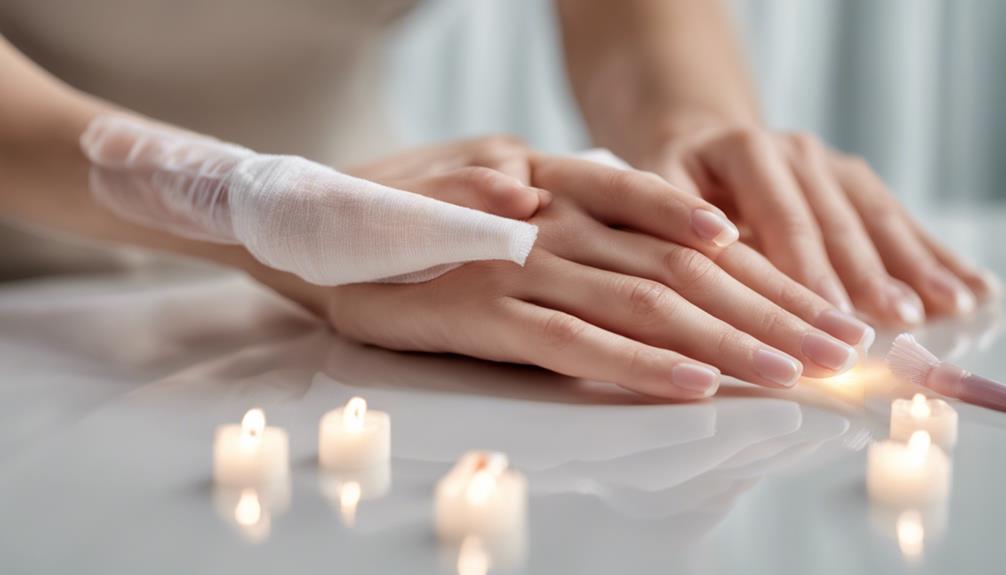
Shielding your regrowing nail with protective coverings like bandages or sterile gauze is crucial to preventing infections. These coverings act as a barrier, keeping dirt and bacteria out of the sensitive area. It’s important to use clean and breathable material to cover the nail. This will help prevent moisture buildup, creating an ideal environment for infections.
Make sure to change the protective covering regularly. This helps keep the area clean and promotes the healing process. You don’t want a tight covering; it might restrict airflow, leading to moisture accumulation and increasing the risk of infections. Instead, opt for coverings that are snug but allow air to circulate.
Following proper hygiene practices is also vital. Always wash your hands before touching the regrowing nail, and ensure the surrounding area remains clean. This reduces the chances of introducing bacteria that could cause infection.
Incorporating these steps into your nail care routine will help keep your regrowing nails protected and healthy. Clean and breathable materials, regular changes, and good hygiene practices are key to preventing infections during regrowth.
Apply Antibacterial Ointments
Maintaining the health of your regrowing nails involves more than just protective coverings; applying antibacterial ointments is a critical step in preventing infections. Keeping your nail bed clean and free of harmful bacteria is essential for a smooth healing process. Antibacterial ointments help create a protective barrier over the nail bed, reducing the risk of secondary infections.
When you apply antibacterial ointments regularly, you’re not just preventing infections; you’re also promoting faster nail regrowth. This added layer of protection guarantees that your nail bed remains in top condition, allowing the new nail to grow without complications. The application process is simple and should become a routine part of your nail care regimen.
Here are some key points to remember:
- Prevents infections: Keeps harmful bacteria at bay, ensuring a healthy nail bed.
- Promotes healing: Creates a conducive environment for your nails to regrow.
- Regular use: Essential for maintaining hygiene during the nail regrowth process.
Consult a healthcare professional to select the appropriate antibacterial ointment for your needs. By incorporating this practice, you’re taking proactive steps to guarantee your nail regrowth journey is smooth and infection-free.
Nutrients for Nail Health
Healthy nails don’t just happen; they require nutrients to grow strong and resilient. To support nail growth, you need to be mindful of your diet. Iron deficiency can lead to brittle nails, so ensure you eat iron-rich foods like spinach and red meat. Including omega-3 fatty acids, found in fish and nuts, can improve the strength and appearance of your nails. Zinc is another critical nutrient for nail growth and repair; without enough zinc, you might notice your nails becoming brittle. You can find zinc in foods like pumpkin seeds and whole grains.
In addition to these, consuming protein-rich foods is essential for nail structure and growth. Lean meats, beans, and dairy products provide the necessary building blocks for your nails.
Don’t forget about biotin, a B vitamin that promotes healthy nail growth and strength. Biotin can be found in eggs, almonds, and sweet potatoes. Incorporating these nutrients into your daily diet gives your nails the best chance to grow strong and healthy. Remember, what you eat directly impacts the health and appearance of your nails.
When to Seek Help
While maintaining a nutrient-rich diet is important for nail health, there are instances when you need to seek professional help. During the regrowth process, certain signs indicate that it’s crucial to consult a healthcare professional. If you notice persistent pain, swelling, or redness around the regrowing nail, seeking medical attention is vital. These symptoms could signal an underlying issue that needs prompt treatment.
Additionally, pay close attention to any unusual discoloration, thickening, or deformities in your nails. Such changes can indicate infections or other serious conditions requiring professional intervention. If you experience delayed or abnormal toenail regrowth, don’t hesitate to contact a podiatrist or dermatologist for advice and treatment.
Here are some clear indicators that you should seek help:
- Persistent sensitivity or discharge around the nail area.
- Recurring nail problems or issues during the regrowth process.
- Noticeable changes in nail appearance, such as thickness or color.
Ignoring these signs can lead to more severe complications, so addressing them early is crucial. You seek medical advice when necessary to ensure your nails remain healthy and strong throughout the regrowth process.
Footwear and Lifestyle Choices

Choosing the right footwear and making smart lifestyle choices can substantially impact your nail regrowth process. Start by selecting footwear with ample toe box space, good arch support, and cushioned soles. These features promote healthy toenail regrowth by providing room and support for your nails to grow properly. Opt for breathable materials in your footwear choices to prevent moisture buildup and fungal infections, which can greatly hinder nail health.
Avoid tight, constricting shoes as they put undue pressure on your toenails and can disrupt the regrowth process. Instead, choose shoes that allow your toes to move freely and reduce the risk of trauma. Maintaining a balanced lifestyle with regular exercise and a nutritious diet can substantially support overall nail health and regrowth.
Consider implementing lifestyle changes to reduce trauma to your toenails. Protect them during physical activities by wearing appropriate footwear that offers maximum protection and cushioning. By making these adjustments, you’ll create an environment conducive to healthy toenail regrowth and prevent common issues such as fungal infections. Remember, your footwear and daily habits are pivotal in maintaining ideal nail health.
Conclusion
Taking care of your nails during the regrowth process is essential. Protect your regrowing nails with breathable coverings, change them regularly, and apply antibacterial ointments to prevent infections. Incorporate nutrient-rich foods into your diet to support nail health. Always monitor for unusual symptoms, and don’t hesitate to seek professional help if needed. By following these steps, you’ll guarantee your nails grow back stronger and healthier. Your efforts will pay off with beautiful, resilient nails.
FAQs
1. What to Do While Nail Is Growing Back?
While your nail grows back, focus on nail strengthening and cuticle care. Stick to a moisturizing routine, eat a healthy diet, and regularly trim the nail straight across. Remember to keep it clean and dry to avoid infections.
2. What Helps With Nail Regrowth?
Proper filing techniques and cuticle care can boost nail regrowth. Moisturizing tips and nail-strengthening products can also help. Growth supplements, like biotin, can also help. Avoid harsh products to protect your nails as they grow.
3. How Do You Take Care of a Growing Nail?
You must moisturize daily to keep nails hydrated. Trim straight to avoid breakage, and eat a balanced diet for proper nutrition. Gently push back cuticles and wear protective gloves when needed. Consistency is key.
4. What Is the Process of Nail Regrowth?
The nail regrowth process starts with new cells forming in the nail matrix. The nail bed requires healing and the cuticle needs maintenance. Avoid nail polish and focus on removal. Guarantee fingernail protection to monitor growth progress.

