

When choosing between gel and acrylic nails, you need to consider what suits your lifestyle and preferences. Gel nails offer a sleek, natural look with flexibility, lasting up to two weeks, while acrylic nails are known for their strength and affordability. However, each option has its own set of drawbacks, such as yellowing for acrylics or a longer application process for gels. So, what factors should you prioritize when selecting your perfect manicure? Let’s explore the nuances that might tip the scale for you.
Key Takeaways
- Gel nails provide a glossy, natural finish, while acrylics offer strong, long-lasting results.
- Gel nails require UV or LED light curing, whereas acrylics need a liquid monomer and powder polymer mix.
- Acrylic nails are more affordable and have a quicker application than gel nails.
- Gel nails are less likely to yellow over time and are more flexible than acrylic nails.
- Both types need regular maintenance. Gel nails are removed by soaking in acetone, while acrylics often require filing.
Gel Nails Overview
Cured with UV or LED light, gel nails provide a glossy, natural, flexible, and durable finish. They’re a great option if you’re looking for nails that can withstand daily wear and tear. Unlike acrylic nails, gel nails are more flexible, reducing the risk of chipping. This flexibility makes them preferred for a manicure that can bend a little without breaking.
One of the biggest advantages of gel nails is their lasting power. With proper care, gel nails can last up to two weeks, making them a convenient option for those who don’t have the time for frequent touch-ups. The immediate drying process with UV or LED light means you don’t have to worry about smudging your nails right after application.
For those who enjoy DIY projects, gel nail kits with UV or LED lights are available, allowing you to achieve salon-quality results at home. These kits make getting that professional, lasting finish easy without the salon price tag.
Acrylic Nails Overview
Now, let’s explore acrylic nails, which are known for their strength and durability due to the liquid monomer and powder polymer mixture used in their creation. Acrylic nails combine these two components to form a protective layer over your natural nails. They’re thicker and less flexible than gel nails, making them more robust but more prone to chipping or breaking.
Here’s a quick overview of acrylic nails:
| Feature | Details |
|---|---|
| Materials Used | Liquid monomer and powder polymer |
| Durability | Strong and long-lasting, but can be prone to chipping and breaking |
| Removal Process | Filing and soaking in acetone which can cause damage to the natural nail bed |
| Cost | Generally more affordable than gel nails |
The process for acrylic nails doesn’t require a curing light, so application time is quicker than gel nails. However, the removal process for acrylic can be more challenging. You’ll need to file them down and soak them in acetone, which can lead to damage to the natural nail bed.
Application Process
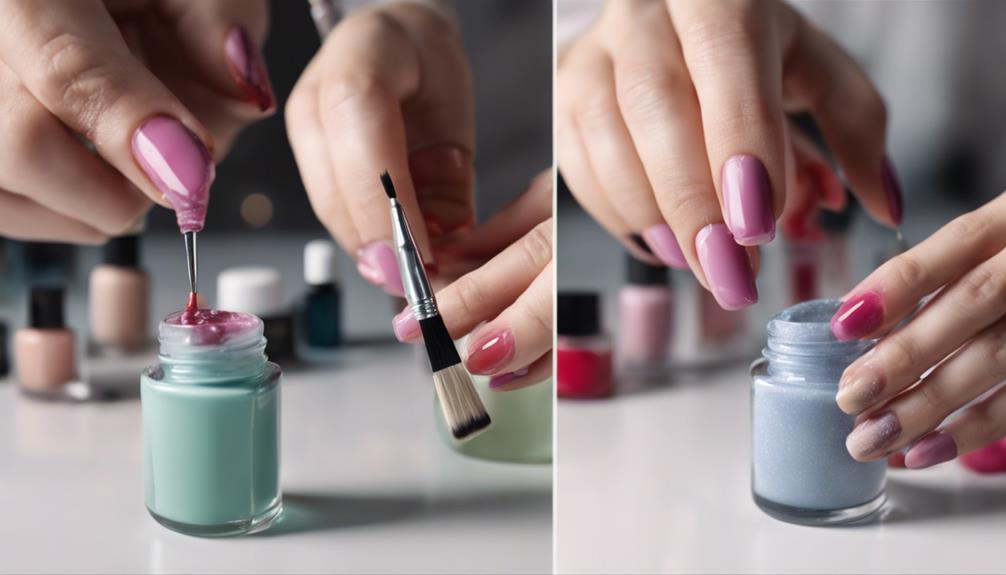
When applying acrylic nails, you’ll start by preparing your natural nails through cleaning, trimming, and buffing to guarantee a smooth surface. The application involves mixing the liquid monomer and powder polymer to form a paste. You’ll then sculpt and mold this paste onto your nails. Acrylic nails harden as exposed to air, allowing you to shape and mold them into various lengths and styles. Once they’ve solidified, more buffing and wiping help achieve a polished finish.
For gel nails, the application process begins similarly with buffing your nails and wiping them with alcohol to remove any natural oils. You’ll then apply the gel polish in thin, even layers. Between each layer, you’ll use a UV light for the curing process, which instantly hardens the gel. This curing process allows the gel nails to dry immediately, reducing the risk of smudging. Gel nails can be applied over natural nails, acrylics, or gel extensions, offering a versatile range of looks.
In both methods, precision in shaping and molding is key. While acrylic nails rely on air drying, gel nails depend on the UV light curing process for their final result.
Maintenance and Removal
Maintaining and removing gel and acrylic nails requires regular attention to keep them looking their best and prevent damage to natural nails. Gel nails and acrylic nails have different maintenance needs.
Due to natural nail growth, gel nails may require more frequent infills every 2-3 weeks. Meanwhile, acrylic nails, known for their durability, also need infills to maintain their appearance and integrity.
When it comes to removal, using proper techniques is essential. Here’s a simple guide:
- Gel Nails: Soak them in acetone to loosen the gel for easy removal.
- Acrylic Nails: Often require filing for removal, which can be more labor-intensive.
- Both Types: Schedule regular maintenance appointments to promote longevity and prevent nail damage.
Proper removal techniques are vital to avoid harming your natural nails. Acetone soaking is necessary for gel nails, while acrylic nails typically need careful filing for removal.
Regular maintenance appointments will help you keep your nails looking stylish and healthy. By paying attention to these steps, you can enjoy the benefits of gel and acrylic nails without compromising the health of your natural nails.
Pros and Cons

Choosing between gel and acrylic nails involves weighing the pros and cons of each option to determine which best suits your lifestyle and preferences.
Gel nails are more natural and less likely to yellow over time. They’re known for their durability and flexibility, making them ideal for nails that can withstand everyday activities without chipping. However, gel nails often have a higher price tag and a longer application process than acrylic nails.
On the other hand, acrylic nails are generally more affordable and have a faster application process. They can last longer than gel nails if properly maintained, but they’re more prone to chipping and breaking. Additionally, acrylic nails may turn yellow over time and are harder to remove, which can be a significant downside if you frequently change your nail style.
When considering your natural nails’ overall health and longevity, gel nails might be a better choice. They’re less damaging during the removal process and help maintain the integrity of your natural nails. Ultimately, your decision will depend on balancing factors like durability, flexibility, affordability, and the time you can commit to the application and removal processes.
Conclusion
When deciding between gel and acrylic nails, consider what you value more: the natural, glossy finish and flexibility of gels or the strength and affordability of acrylics.
Gels need less maintenance and avoid yellowing, while acrylics offer a quicker, cost-effective application but might chip and yellow over time.
Your choice ultimately depends on your lifestyle and how much upkeep you can handle. Choose what fits you best, and enjoy your fabulous nails!

