
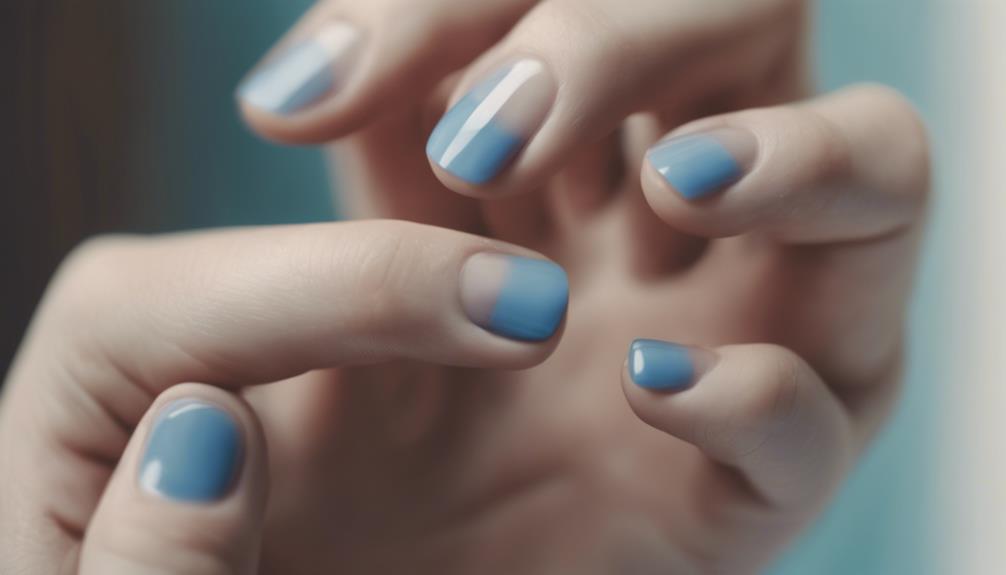
When you notice that your nail beds have turned blue, you’re likely dealing with cyanosis. It’s not something to ignore, as it can signal various health issues ranging from low oxygen levels in your blood to heart or lung problems that affect circulation. Sometimes, cold temperatures can restrict blood flow enough to cause this discoloration. What’s fascinating is how observing your nails’ color can help diagnose peripheral or central cyanosis, each pointing to different underlying concerns. Are you curious about what else might be at play and when you should seek medical help?
Key Takeaways
- Blue nail beds may indicate low oxygen levels in the blood, known as cyanosis.
- Heart or lung conditions can cause blue discoloration of the nail beds.
- Cold temperatures can lead to blue nail beds by reducing blood flow.
- Seek immediate medical help if blue nail beds are accompanied by shortness of breath or chest pain.
- Regular check-ups and lifestyle adjustments, like quitting smoking, can help prevent blue nail beds.
Causes of Blue Nail Beds

Blue nail beds are often caused by low oxygen levels in your blood, a condition known as cyanosis. When your body isn’t getting enough oxygen, your blood doesn’t carry as much oxygen to your tissues, including your nail beds. Several factors can lead to this issue, with heart conditions being one of the primary culprits. A heart not pumping efficiently can result in poor circulation and reduced oxygen delivery, making your nail beds appear blue.
Cold temperatures can also cause your nail beds to turn blue. When exposed to the cold, your blood vessels constrict to preserve heat, reducing blood flow to your extremities, including your fingers. This decreased circulation can temporarily lead to blue nail beds.
Other serious medical conditions, such as lung diseases, can affect how well oxygen is transferred into your blood, leading to cyanosis. Hemoglobin problems or abnormalities in your blood vessels can further contribute to this condition.
Types of Cyanosis
Cyanosis manifests in different forms, each affecting various parts of the body and indicating distinct underlying issues. When you notice blue nail beds or skin, it’s essential to understand the type of cyanosis at play.
Peripheral cyanosis primarily affects distal extremities, such as fingers and toes. It occurs when blood flow is restricted, causing a lack of oxygenated blood in those areas. You might experience this if exposed to cold or have poor circulation.
Central cyanosis is more concerning as it affects the entire body, including mucous membranes like the lips and tongue. This type usually points to serious underlying conditions affecting the lungs or heart, where the blood isn’t properly oxygenated.
Acrocyanosis results in persistently blue-tinted hands and feet, often due to small blood vessels in the skin constricting. Unlike peripheral cyanosis, Acrocyanosis is typically less serious but can be uncomfortable.
Understanding these types helps you gauge the severity and possible underlying condition causing the blue discoloration.
Diagnosing Cyanosis

When you notice signs of cyanosis, diagnosing the specific type involves careful observation of the affected areas and understanding the underlying causes. Start by examining the blue discoloration in the nail beds, lips, skin, and mucous membranes. Knowing where the discoloration appears can help determine whether you’re dealing with peripheral cyanosis, which affects distal extremities like the nail beds, or central cyanosis, which impacts the entire body.
Look for blue-tinted hands and feet, indicating peripheral cyanosis or conditions like Raynaud’s syndrome and AcrocyAcrocyanosisaud’s syndrome, typically Acrocyanosisl blood vessels in your arms and legs, leading to temporary cyanosis, while Acrocyanosists in persistently blue-tinteAcrocyanosis or feet.
If you observe bluish discoloration around the mouth, it suggests perioral cyanosis and further evaluation may be needed to rule out serious conditions affecting oxygen levels in the blood.
Central cyanosis, characterized by a widespread blue tint, indicates more systemic issues often related to heart or lung problems.
Diagnosing cyanosis accurately requires observing the blue discoloration and understanding the broader context and associated symptoms. By pinpointing the type and location of cyanosis, you can better identify the underlying cause.
Treatment Options
Addressing blue nail beds effectively hinges on identifying and treating the underlying cause. Pinpointing the root issue is vital for successful treatment, whether it’s heart conditions, lung conditions, poor circulation, or hemoglobin abnormalities.
Your treatment options range from simple lifestyle adjustments to more intensive medical interventions. Here’s a breakdown:
- Medications: People with heart or lung conditions might require specific drugs to improve function and increase oxygen levels in their blood.
- Oxygen Therapy: For chronic lung disease patients, supplemental oxygen can help boost blood oxygen, reducing cyanosis.
- Surgical Interventions: In severe cases, surgery might be necessary to correct structural issues in the heart or lungs or to improve circulation.
Lifestyle adjustments, such as quitting smoking, exercising regularly, and adopting a heart-healthy diet, can also play an important role in managing underlying conditions. Collaboration among specialists like cardiologists, pulmonologists, and vascular surgeons is sometimes necessary for a thorough approach.
The primary goal is to address the root cause of cyanosis and restore normal oxygen levels in your blood. By doing so, you can effectively manage and potentially reverse the blue tint in your nail beds.
When to Seek Help
If you notice this and symptoms like shortness of breath or chest pain, don’t wait to seek medical help. These signs can indicate serious health issues that need prompt evaluation.
Always consult a healthcare professional for a proper diagnosis and treatment plan.
Concerning Symptoms
Recognizing blue nail beds alongside symptoms like shortness of breath or chest pain is vital for identifying potentially life-threatening conditions. These symptoms might indicate a lack of oxygen in your blood, which can be a sign of a serious medical emergency. It’s essential to understand that blue nail beds can reveal underlying health conditions that need immediate attention.
If you observe blue nail beds coupled with any of the following symptoms, you should seek medical help right away:
- Profuse sweating: This could signal a heart attack or severe infection.
- Dizziness or fainting: These episodes might be due to a sudden drop in blood pressure or other critical conditions.
- Chest pain: This is often associated with heart problems and requires urgent evaluation.
Understanding the causes behind blue nail beds and these concerning symptoms can help you act quickly. Shortness of breath, chest pain, and lack of oxygen shouldn’t be taken lightly. Profuse sweating, dizziness, and fainting can compound the urgency.
Always remember that these signs indicate potential underlying health conditions needing prompt medical intervention. Don’t hesitate to seek help if you’re experiencing these symptoms.
Professional Consultation
Don’t wait to seek medical help if you notice blue nail beds, especially when they’re coupled with symptoms like shortness of breath or chest pain. These signs can indicate underlying health issues, particularly heart or lung conditions.
Blue nail beds, or cyanosis, may indicate low oxygen levels in the blood, necessitating a thorough medical evaluation.
Persistent shouldn’t be ignored, as they could signal serious health problems that require prompt medical help. A professional consultation with a healthcare provider is essential to determine the root cause. Your doctor might check for heart or lung conditions, common culprits behind such symptoms.
If you experience blue nail beds without an obvious cause, like cold temperatures, it’s important to seek medical evaluation. This step ensures that potential serious health issues are identified and treated early. Remember, blue nail beds can signify significant health problems that shouldn’t be taken lightly.
Don’t hesitate to get medical attention to address these concerns promptly. Seeking professional consultation can significantly improve your health outcomes.
Prevention Tips
Are you wondering how to keep your nail beds healthy and avoid turning blue? Prevention is key. Start by keeping your nails well-moisturized to prevent dryness and cracking, which can lead to blue nail beds. Wear gloves to protect your hands and maintain good circulation when the temperature drops. This helps prevent blue nails caused by cold weather.
Avoid smoking and exposure to secondhand smoke, as both can contribute to poor circulation and cyanosis. Staying hydrated and maintaining a healthy diet is essential for overall nail health, ensuring they remain pink and strong. Regularly check your nail beds for any changes in color or texture. If you notice persistent blue nails, seek medical attention immediately.
Here are some quick tips to keep in mind:
- Moisturize Regularly: Apply a good hand cream to hydrate your nails and cuticles.
- Protect in Cold Weather: Wear gloves to keep your hands warm and maintain circulation.
- Stay Healthy: Avoid smoking, stay hydrated, and eat a balanced vitamin-rich diet.
Conclusion
If you notice blue nail beds, don’t ignore them. They can indicate serious health issues like low oxygen levels, heart or lung problems, or even cold temperatures.
Recognizing the types of cyanosis and seeking medical help, especially if you experience shortness of breath or chest pain, is vital.
By understanding the causes and treatment options, you can proactively protect your health and prevent further complications.
Related Article
https://glownailbar.com/tortoiseshell-nails/
https://glownailbar.com/extremely-dry-cuticles-and-hangnails/

